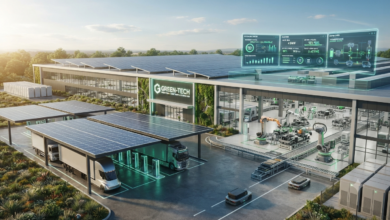
Off-Grid Industrial Solar Charging Systems: Microgrid Reliability for Remote Operations
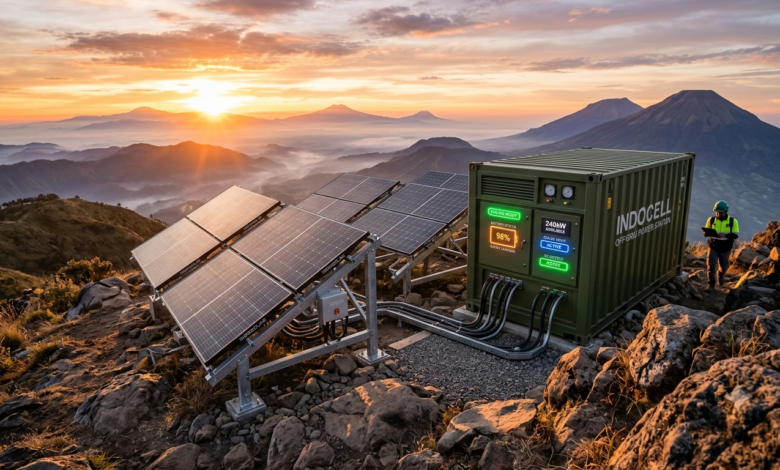
For critical infrastructure—such as telecom towers, mining sites, remote agricultural tech, and field research facilities—access to a stable power grid is often unavailable. Off-grid industrial solar charging systems powered by advanced photovoltaic (PV) arrays and high-capacity battery chemistry have emerged as the primary alternative to expensive, high-emission diesel generators.
Technological Innovations Driving Off-Grid Efficiency
Modern industrial solar charging ecosystems leverage cutting-edge energy management hardware to ensure continuous power availability:
- High-Efficiency Monocrystalline Panels: Utilizing TOPCon and PERC solar cell architecture, modern panels achieve conversion efficiencies above 23%, generating maximum power even under diffuse or overcast conditions.
- Lithium Iron Phosphate ($LiFePO_4$) Energy Storage: Industrial $LiFePO_4$ battery banks deliver superior thermal stability, deep depth of discharge (DoD), and over 4,000 charge cycles, making them ideal for extreme field environments.
- Maximum Power Point Tracking (MPPT) Controllers: Advanced MPPT algorithms continuously optimize current and voltage levels, extracting up to 30% more energy from the solar array compared to legacy controllers.
Ensuring Zero-Downtime Performance
Deploying off-grid solar infrastructure in harsh environments requires IP67-rated weatherproofing, remote IoT monitoring, and automated smart-load shedding. Investing in robust off-grid power guarantees uninterrupted operations while eliminating recurring fuel logistics costs.