Commercial Solar EV Charging Stations: ROI, Tax Credits, and Enterprise Setup Guide
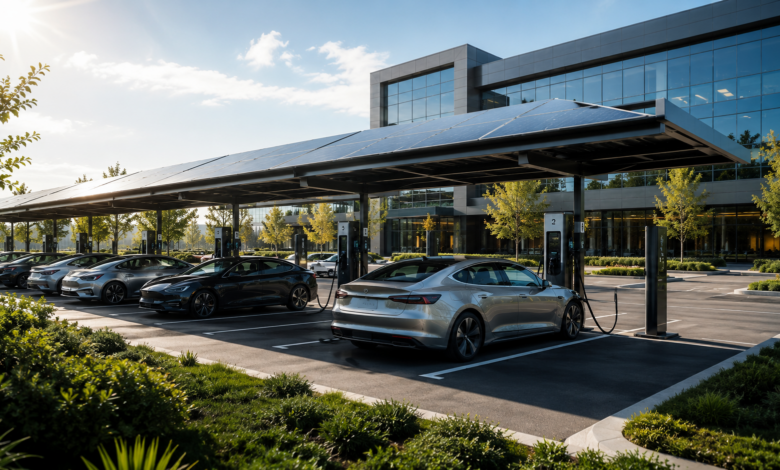
As commercial fleets and consumer vehicles rapidly transition to electric power, integrating solar charging infrastructure has shifted from an environmental statement to a strategic financial asset. Commercial solar EV charging stations allow enterprises to generate zero-emission electricity on-site, significantly slashing operational energy overhead while securing long-term grid independence.
Understanding the Enterprise Financial Return (ROI)
Investing in commercial solar-powered charging infrastructure delivers a dual revenue stream for businesses. First, it offsets peak demand electricity charges from municipal utility providers. Second, businesses can monetize charging ports for employees, clients, and public users.
- Demand Charge Mitigation: Commercial electricity tariffs often charge premium rates based on maximum power draw. Solar-plus-storage systems cap these peak power draws by drawing power directly from daytime solar generation or integrated battery banks.
- Monetization Options: Enterprise managers can implement tiered pricing access via software integrations, offering free charging as an employee perk while generating passive revenue from external visitors.
Federal Tax Credits & Commercial Incentives
In major markets like North America and Europe, government incentives substantially lower upfront capital expenditures. Under the U.S. Inflation Reduction Act (IRA), commercial entities can leverage the Investment Tax Credit (ITC), covering up to 30% or more of the total installation cost when meeting specific labor and domestic manufacturing benchmarks. Combined with accelerated depreciation models (MACRS), businesses frequently recoup their initial investment within 3 to 5 years.
Core Architectural Components
Deploying a scalable enterprise solar charging array requires three primary structural pillars:
- Solar Canopies & Carports: Maximizes unused parking lot space while protecting vehicles from weather elements.
- Commercial Energy Storage Systems (BESS): High-capacity lithium-iron-phosphate (LFP) battery banks that store excess solar energy for nighttime charging.
- Smart Load Management Software: Cloud-connected energy management protocols that balance dynamic power distribution across dozens of vehicles simultaneously without overloading the localized electrical grid.