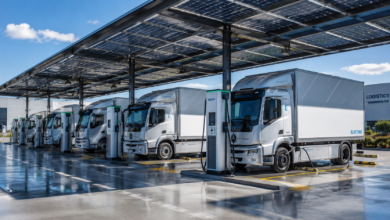
Commercial EV Solar Charging Stations: Enterprise Integration, Grid Resilience, and ROI
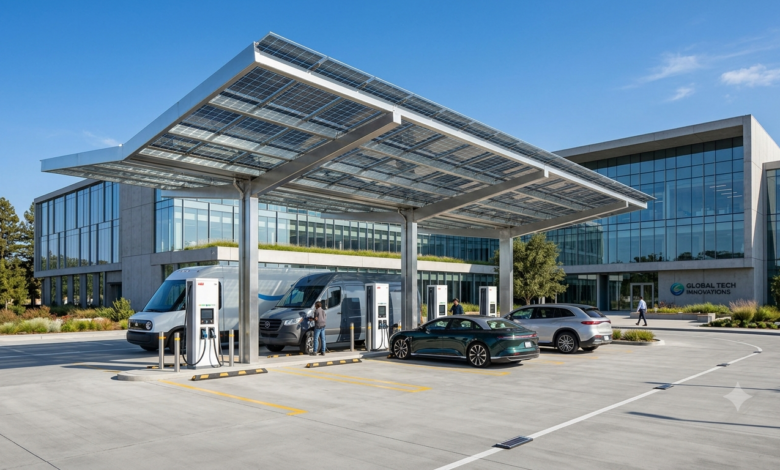
As commercial fleets and corporate transit rapidly transition to electric vehicles (EVs), reliance on the public power grid presents operational challenges, including unpredictable demand charges and potential grid overloads. Integrating commercial EV solar charging stations equipped with localized microgrids offers an enterprise-level solution that secures operational continuity while drastically reducing long-term energy overhead.
Financial and Operational Advantages for Enterprises
Deploying solar-powered EV charging infrastructure provides high-return opportunities for commercial real estate owners and fleet operators:
- Peak-Shaving and Demand Charge Mitigation: By utilizing solar energy during peak tariff hours, businesses can smooth out power consumption spikes and avoid costly utility surcharges.
- Battery Energy Storage System (BESS) Integration: Coupling solar arrays with industrial-grade lithium energy storage ensures continuous fast-charging capabilities, even during grid outages or low-irradiance conditions.
- Monetization via Virtual Power Plants (VPPs): Commercial facilities can feed excess generated solar energy back into the local grid during high-demand periods, creating secondary revenue streams.
- Corporate ESG Compliance: On-site solar generation directly reduces Scope 1 and Scope 2 carbon emissions, supporting sustainability mandates for institutional investors.
Strategic Deployment Considerations
To maximize return on investment (ROI), enterprise decision-makers must evaluate site-specific solar irradiance, federal tax incentives, and modular scalability. Partnering with certified commercial solar EPC (Engineering, Procurement, and Construction) firms guarantees optimal canopy design, seamless payment gateway integration, and compliance with local utility regulations.